
THANK YOU FOR SUBSCRIBING

Technology to Facilitate Business
× 
Applied Technology Review Weekly Brief
Be first to read the latest tech news, Industry Leader's Insights, and CIO interviews of medium and large enterprises exclusively from Applied Technology Review










Creating a Circular Economy to Combat Climate Change
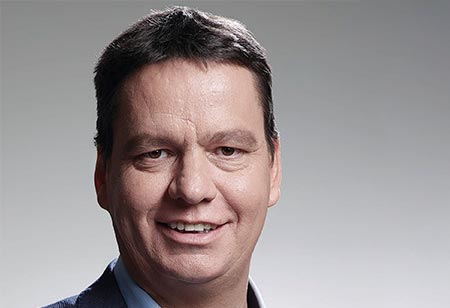
Dave Cheshire, Sustainability Director, AECOM
 Dave Cheshire, Sustainability Director, AECOM
Today, the construction industry demands nearly half of the world’s extracted materials and generates around a third of the world’s waste. Resource extraction is responsible for 90 percent of biodiversity loss and half of all greenhouse gas emissions. A rapid transition away from our throw-away linear economy of take, make, dispose is essential if we are to avert the worst impacts of the climate crisis.
In my latest book, 'The Handbook to Building a Circular Economy,'I explain how a transition to a more regenerative model is urgently needed to tackle the climate crisis. Our towns and cities are a goldmine of valuable resources that have been gleaned from around the world, processed and turned into useful components. The existing urban fabric could provide all the resources that we need to regenerate the built environment, but we have to leverage new digital technology to disrupt and re-design the current systems and wean ourselves off the insatiable appetite for new materials and our ability to generate huge volumes of waste.
To do this, we will have to start mining the urban environment for precious resources. Currently, these precious resources are mostly bound together irreversibly and are being crushed and shredded and sent out to surrounding areas, or even abroad, for processing and down cycling. Urban mining recognises the opportunity for cycling those materials within the urban environment, saving raw materials and avoiding waste. There is a huge stock of buildings, elements and materials that should be exploited before new raw materials are required. When viewed at a city scale, instead of at a project level, reclamation of resources becomes more practical because buildings can become the materials banks in which to store components and materials.
"When viewed at a city scale, instead of at a project level, reclamation of resources becomes more practical because buildings can become the materials banks in which to store components and materials"
Successful urban mining requires data on the locations, quantities and potential release dates of products and materials, as well as new techniques to extract them, and brokers to remanufacture and warranty products.
Building information modelling (BIM) enables constructors to create detailed information about the components of a building and communicate that to operators and those responsible for refurbishing or dismantling the building.
For the existing building stock, being able to catalogue and identify materials is a key step towards effective urban mining. Researchers are using digital techniques to catalogue the resources stored in existing buildings, and have mapped the locations and types of bricks in the city of Bradford, for example. To extract the materials, there are exciting new techniques emerging that will allow us to make new concrete from old, punch the mortar out from between bricks and make new structural timber (CLT) from salvaged wood.
There are brokers, such as GlobeChain, who have created a reuse marketplace that connects corporates to charities, SMEs, and people to redistribute unneeded items to those that need them. It has over 10,000 members and has diverted over 6.1 million kilograms of resources from landfill, creating savings of over €4.4 million for charities.
We need to scale all this technology up to the point that the stock of materials in the urban environment can be used to store the resources in buildings–becoming materials banks–providing resources for the future.
Applying circular economy principles to the built environment could radically reduce its carbon footprint, slash demand for new materials and turn waste into a resource. With the climate crisis looming, a more sustainable model is urgently needed before it’s too late.

Read Also

Shaping the Future of Traffic with Digital Innovation
Janne Lautanala, Chief Ecosystem and Technology Officer, Fintraffic

Digital Twins - The Context and Complexity
Anthony Tuffour, Director of Global Lead GIS and Digital Twins, Buro Happold

Crafting the Future with AI, Cloud and Operational Excellence
Damian Ng, SVP of Technology, Head of Enterprise Architecture, Software Engineering, Reliability and Operations, Anywhere Real Estate Inc
Navigating Supply Chain Challenges
Kyle Moore, Senior Vice President Of Construction, Landmark Properties, Inc

Unlocking Success In Real Estate Technology
Nathan Kimpel, Head of Technology – Multifamily, Cushman & Wakefield

Driving Digital Transformation in Commercial Real Estate
Dusti Wofford, Global Head of Digital Strategy & Technology, CBRE


Top

ON THE DECK