
THANK YOU FOR SUBSCRIBING

Technology to Facilitate Business
× 
Applied Technology Review Weekly Brief
Be first to read the latest tech news, Industry Leader's Insights, and CIO interviews of medium and large enterprises exclusively from Applied Technology Review

Aeromexico
Alejandro R. Ochoa, Head of In-flight Technology
Satellite Technologys Impact on Military and Civil Aviation
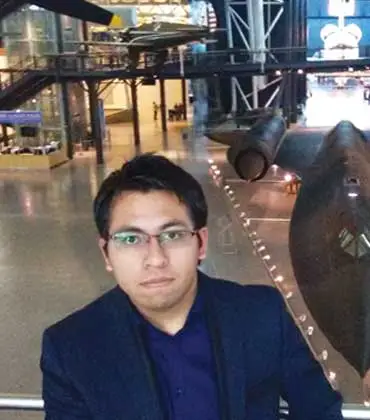
Alejandro R. Ochoa
The use of satellite technology has transformed the aerospace industry. Its applications have transformed military operations, improved aerospace capabilities, and increased the effectiveness and safety of civil aviation.
From a military perspective, developing sophisticated reconnaissance, communication, navigation systems, and satellite technology has significantly enhanced their capabilities. Satellites give military forces access to real-time intelligence, surveillance, and reconnaissance (ISR) capabilities, enabling them to collect crucial data and track adversary activities accurately.
Additionally, data processing and analysis are being revolutionized by integrating artificial intelligence (AI) algorithms in military aircraft systems. Artificial intelligence-enabled algorithms can quickly sift through enormous amounts of data to find patterns, spot anomalies, and assist with mission planning. Artificial intelligence increases operational efficiency and effectiveness by freeing up human operators to concentrate on crucial decision-making by automating repetitive tasks.
The advantages of satellite technology for civil aviation have had a transformative effect, improving safety, efficiency, and passenger experience. With satellite-enabled surveillance and communication, Air Traffic Control (ATC) systems have greatly benefited, enabling more precise aircraft tracking and safer air travel. Pilots and air traffic controllers (ATC) can monitor the precise position, altitude, and speed of aircraft in real-time with satellite-based Automatic Dependent Surveillance-Broadcast (ADS-B) systems, reducing the risk of collisions and enhancing airspace management.
The seamless in-flight connectivity for passengers is largely made possible by satellite communication. It is now possible for passengers to use high-speed internet, voice communication, streaming, and live television services, even on long-haul flights, enhancing productivity and entertainment options. Furthermore, satellites enable airlines to optimize flight routes, reduce fuel consumption, and minimize emissions, all of which help the aviation sector become more environmentally friendly.
Given my position as a leader in the field of inflight technology and my background in military aviation, it is crucial to recognize the enormous potential of satellite technology and to continue investing in research and development to fully utilize its capabilities, including the adoption of artificial intelligence has resulted in a significant transformation.
" Artificial Intelligence has Emerged as a Crucial Innovation Enabler, Enhancing Everything from Military Intelligence and Decision-Making to Aerospace Manufacturing and Maintenance Processes and Revolutionizing Air Traffic Control and Customer Service in Civil Aviation "
Artificial intelligence has emerged as a crucial innovation enabler, enhancing everything from military intelligence and decision-making to aerospace manufacturing and maintenance processes and revolutionizing air traffic control and customer service in civil aviation. But comes great responsibility. To address ethical issues, stakeholders must collaborate in order to guarantee that artificial intelligence systems operate with accountability, transparency, and human oversight.
I believe that continued collaboration between the military and civil aviation will drive further advances, leading to the development of even more sophisticated technologies that promote safer skies, increased operational effectiveness, and advancements in the inflight experience by analyzing passenger preferences with artificial intelligence algorithms, personalized services, and entertainment options are made possible.
The articles from these contributors are based on their personal expertise and viewpoints, and do not necessarily reflect the opinions of their employers or affiliated organizations.

Top
